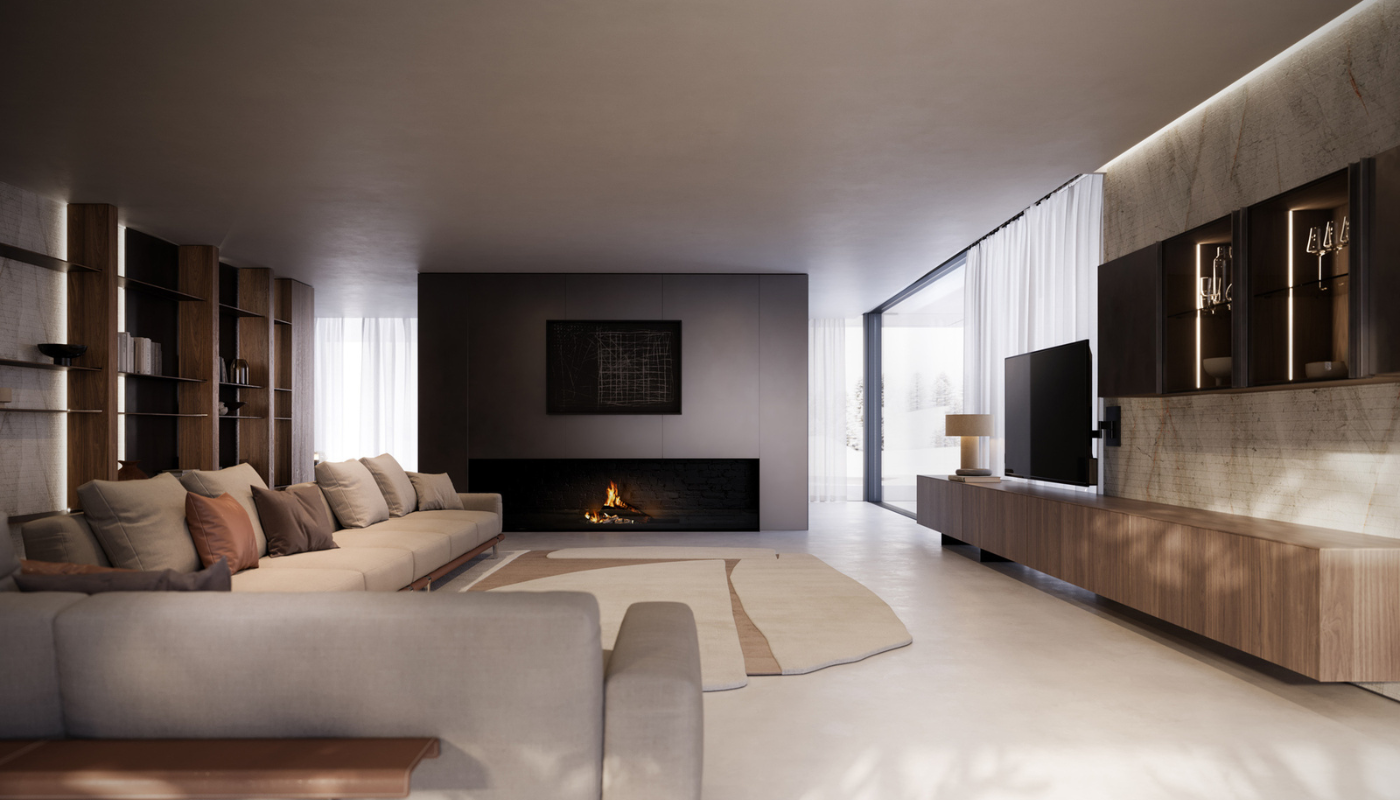
In contemporary architecture, the living room is conceived as a surface capable of bringing together functions, materials and circulation without losing clarity. Modulnova’s Skill collection develops this idea through defined volumes, linear compositions and a precise relationship between equipped walls, low units and open systems.
Skill is a living room collection characterised by substantial volumes, strong chromatic contrasts and the use of refined materials. Its design makes it possible to create warm, ordered interiors in which every element contributes to defining the space.
The collection does not approach furniture as a series of independent pieces. Low units, wall coverings and shelving systems are integrated into a single composition that organises the wall and establishes clear proportions within the room.
Skill’s visual language is based on restrained forms and precise lines. Its volumes have a strong presence, yet remain visually clean thanks to the continuity of the surfaces and the careful treatment of the junctions between materials.
This combination gives the living room character without relying on an accumulation of objects. The interior architecture is built through a limited number of well-proportioned elements: a horizontal base, a clad surface, an open structure or a change in texture that adds depth.
Attention to detail is essential. Each plane establishes a relationship with the next, allowing the whole to be perceived as a complete composition rather than as a sequence of furniture placed against a wall.
Skill is designed through visual order.
One of the collection’s key features is the creation of an equipped wall that brings together storage, display and surface cladding. It acts as a backdrop for the living room, but also as an architectural element that defines the scale and orientation of the space.
The low units strengthen the horizontal development of the composition. They create a stable base for wall coverings, shelves and open bookcase structures. The wall therefore ceases to be a neutral boundary and becomes an active part of the interior project.
This solution is particularly effective in open-plan interiors. The equipped wall concentrates several functions and reduces the need for isolated pieces, making circulation clearer and reinforcing the visual continuity of the space.
The organisation does not depend on additional partitions. It is created through the proportion between solid and empty areas, the length of the low units and the position of the vertical surfaces.
Skill can be combined with the Blade bookcase, updated with a Milltech Riace structure and Milltech Eucalyptus shelves. This introduces an open element into a composition otherwise defined by more compact volumes.
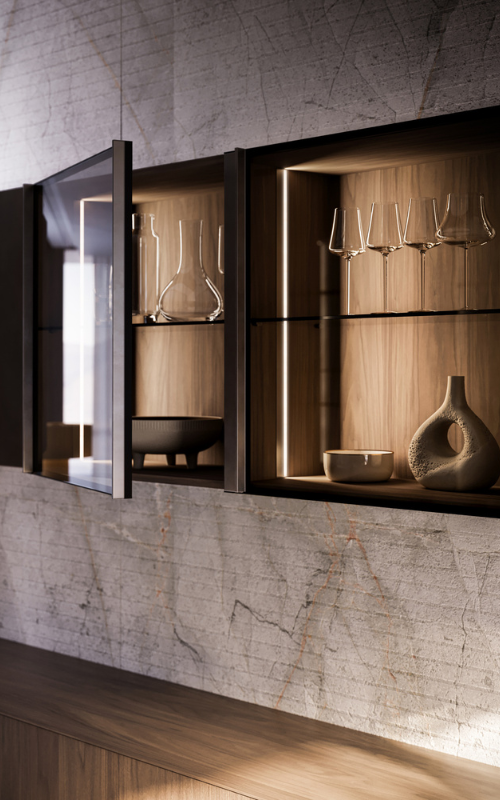
The vertical structure organises the wall without closing it completely. Horizontal shelves provide space for books and objects, while the open areas lighten the composition and allow the background surface to remain visually present.
The contrast between the structure and the shelves reveals the constructive logic of the bookcase. Each element retains its own identity, while remaining part of a shared system with the rest of the furniture.
This alternation between closed volumes and open structures creates rhythm. The living room gains functional capacity without losing its restrained appearance, making it suitable for a contemporary living space where storage is integrated naturally into the interior design.
The Skill collection combines a black stoneware wall covering with low units in Milltech Eucalyptus. The relationship between these two surfaces defines much of the project’s material character.
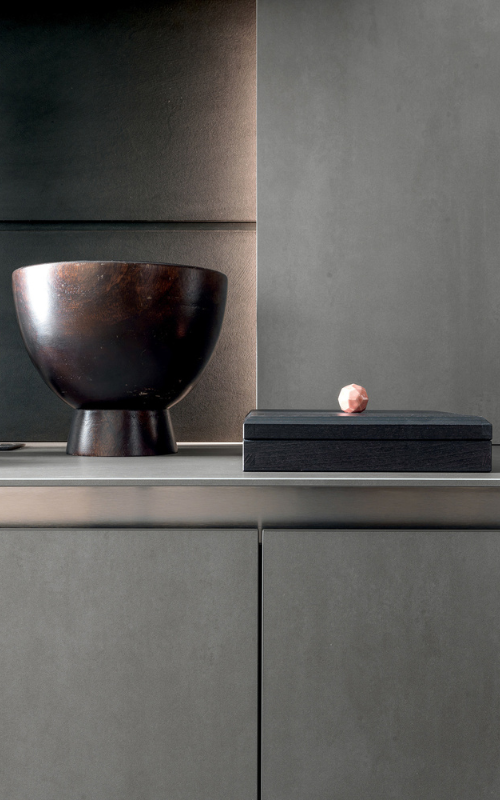
Black stoneware adds depth and strengthens the presence of the wall. Its dark tone creates a continuous background that focuses the eye and makes the volumes placed in front of it easier to read. It is not an isolated decorative feature, but a surface that changes the perception of the space.
The Milltech Eucalyptus finish introduces a warmer texture. In contrast with the visual density of the stoneware, the wood effect adds nuance and brings the composition closer to the everyday experience of the home.
The contrast is not used to divide the space, but to establish hierarchy. The dark surface builds depth, the low units create a horizontal line and the bookcase introduces lightness and rhythm. Each material performs a specific visual role within the composition.
In homes where the living room, dining area and kitchen share the same floor plan, furniture needs to organise the space without fragmenting it. Skill creates a recognisable front that gives structure to the living area while maintaining continuity with the surrounding zones.
The equipped wall can act as a visual reference within an open plan. Its scale helps define the living room, while the combination of closed volumes and open elements prevents the composition from appearing excessively compact.
This organisational capacity is particularly relevant in projects with few physical boundaries. The composition introduces a clear direction, establishes proportion and concentrates storage functions within a single surface.
The result is a more legible interior. The collection responds to the existing architecture, adapts to its dimensions and creates a coherent relationship between furniture, wall finishes and circulation areas.
The contemporary living room accommodates different activities: resting, reading, conversation, occasional work and storage. To respond to this variety, furniture needs to provide functional capacity without dominating the room.
Skill combines low units and shelving systems that organise everyday objects, books and decorative pieces. Closed units reduce visual noise, while open shelves provide space for carefully selected objects.
This arrangement gives each function a defined place. The composition retains an ordered appearance even when the living room is used in different ways throughout the day.
Function is integrated into the geometry of the project. Storage forms part of the volume, the bookcase contributes to the rhythm of the wall and the materials distinguish different planes without the need for additional decorative elements.
Skill interprets the living room as an architectural composition built through material, proportion and rhythm. Black stoneware gives depth to the wall, Milltech Eucalyptus introduces warmth and the Blade bookcase adds an open structure that reduces the visual weight of the whole.
The formal precision of the collection emerges from the relationship between these elements. The volumes organise, the surfaces connect and the empty spaces allow the composition to breathe.
Within contemporary architecture, Skill offers a clear way of integrating furniture and interior space. The collection transforms the living room wall into a system capable of storing, displaying and organising, while maintaining a defined material presence and a visually light composition.